
A leader is defined as “someone who leads; one who has the principal part in something important; the head of a group whose example is followed.” Leadership is “being the leader; having the ability to lead as the head of a group.” LaRue Miller Elementary had the privilege today of hosting a leadership group of leaders from the Midlothian area at our campus. Our Student Honor 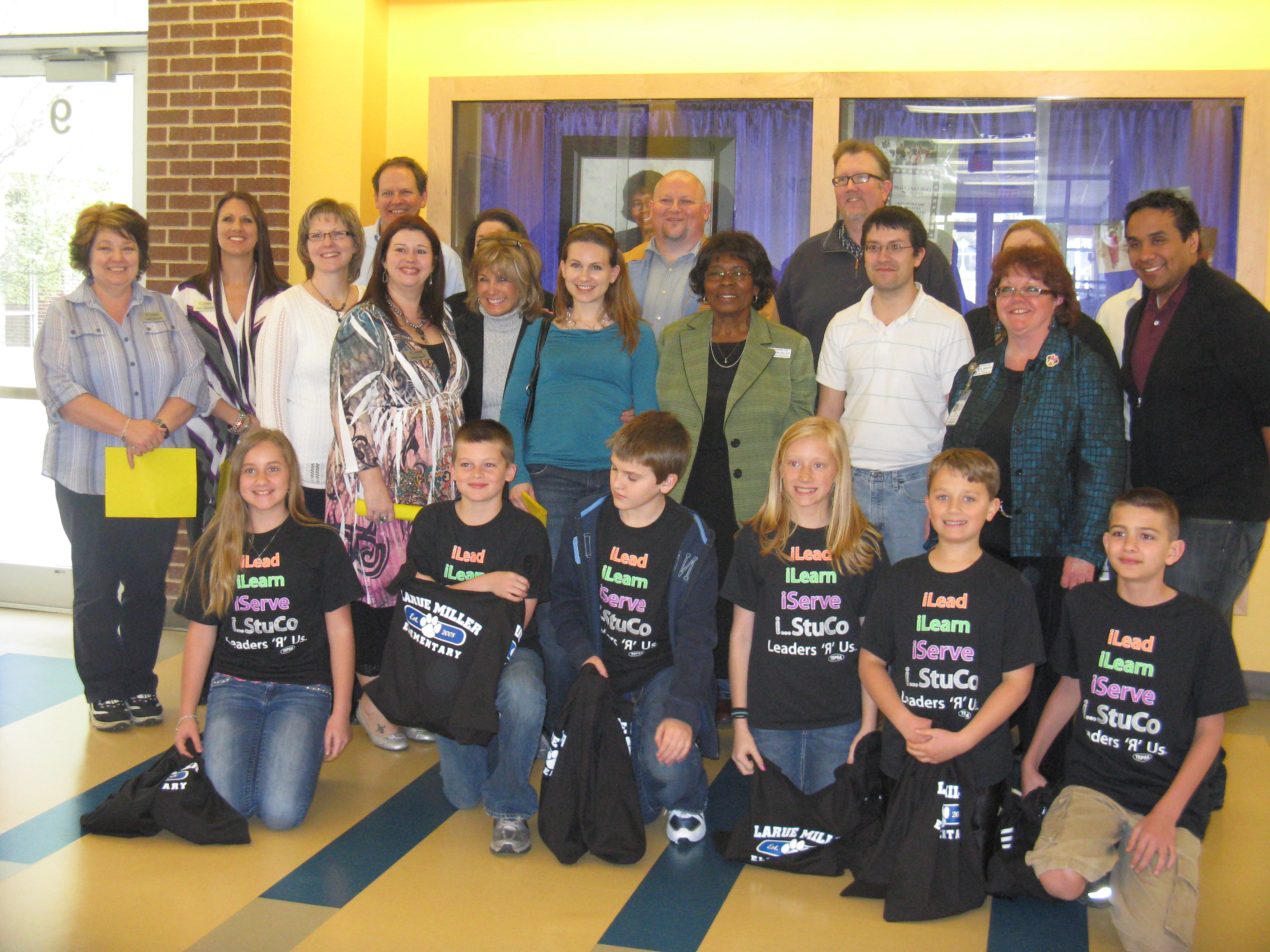 Council served as student leaders and guides throughout the building. Mrs. Miller, our honorary campus leader, spoke eloquently about her educational experiences in Midlothian ISD to this important group. Dr. Stewart and other MISD administrators took time out to share their thoughts and answer questions. I shared specific information about our campus as well as the unique programs a
 nd projects experienced at all six MISD elementary schools. The leadership group spent time touring and visiting in classrooms to see our learners in action. Some of our CBI and PPCD friends were working in Tricycle Town (our outdoor language learning classroom). As you can tell, they were having a great time in the breezy weather! Our StuCo
 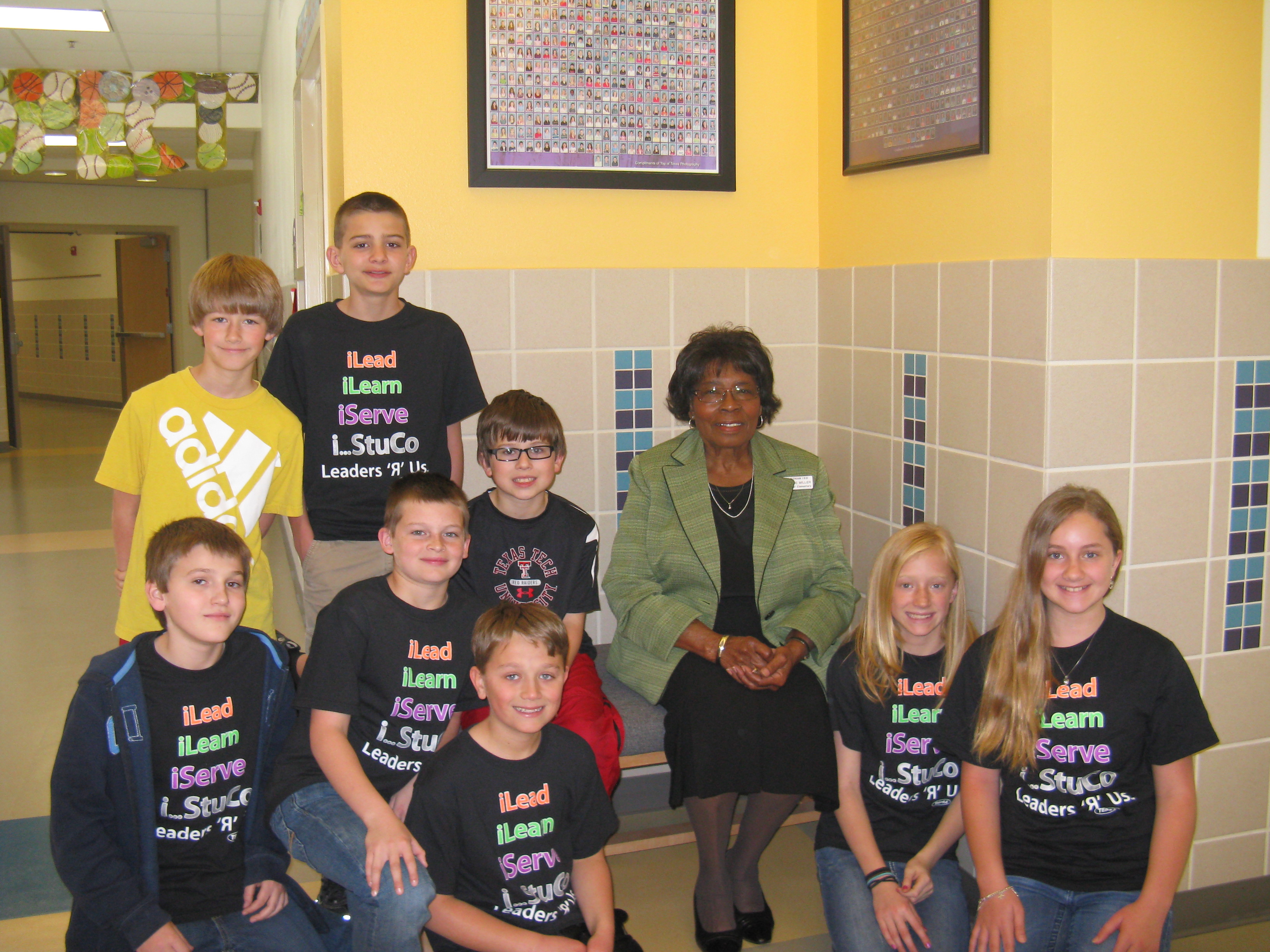 presented each visitor with a special Miller Elementary t-shirt bag of goodies to commemorate their time here with us. Yes, we are blessed in MISD to have community leaders who take time away from busy daily schedules to support and encourage our work in the schools; their investment today truly reaps rewards for the future in Midlothian ISD and Midlothian, Texas!
Personal Reflections
BElieve in YOUrself!
During morning walk-about today, I happened across a small group discussion taking place regarding our morning message from the announcements:
Learner #1: Did you hear what she was talking about; did you listen to the message?
Learner #2: It’s hard to believe in myself sometimes; I don’t always get it right.
Learner #3: That’s the point; you have to believe in you in order to believe in yourself and others. You have to be your own coach sometimes; we’ll be a coach with you.
Learner #1: Just like the Abraham Lincoln quote she said, “I do the very best I know how, the very best I can, and I mean to keep doing it to the end.” You only have to do your personal best; that’s all any of us can really do.
Although the conversation carried on a bit, they noticed I was standing close by observing (our caring counselor, Mrs. Stanley, would not have been any prouder at that moment; they talked while I just listened!). The whole point to morning message everyday is to challenge our learners and their classroom leaders to become interdependent of each other—not dependent and not independent, but interdependent thinkers and leaders for the future—working together for the common good. Observing this group in action today is a great example of how they are heeding the call to assist one another.
We are focusing this week on BElieving in YOUrself (just like the graphic shows). This is the start of a challenging time in Texas Public Education for our learners (as we gear up for the first round of state assessments); we want them truly BELIEVING in themselves and their academic abilities, their classroom leaders, and each other. Here’s hoping you share your belief in your learner today (and everyday!). 🙂
Fads and Fresh Starts…
We’re back in session and if the weather is any indication of the day, things are moving fast and furious indeed! During morning walk-about, some students visited with me concerning fads—you know, those particular likes (or dislikes) and fashionable crazes.

 These IMAGINE students, under the direction of GT teacher, Peggy Davidson, studied trends and philosophical ideas from various generations and decades in the 20th century. While dressing the part to make their point, they each presented a unique perspective showcasing the trendy styles, ideas, and fun facts in various genres. Although they laughed at previous directions in our society, I reminded them that they will someday reap the wrath of future generations for their choices today (as a mom, I know this firsthand since my own are forever questioning my prior choices of dress, style, fads, and ideas—you know what I’m talking about, too!). 🙂 Of course, I had to share some pictures from my 28+ years in education with them—the good and the not-so-good “teachery” fashion choices as well as my hair changes through the years—we all had a good laugh! Here’s some LME trend trivia for you: Did you know, some of our Miller staff still have their original school shirts, painted shoes, and “teacher” sweaters from the early 80s? We’ll have another “vintage” day sometime to show them off to you!
We also enJOYed a springy but rainy fresh start today as we gear up for the remaining weeks of the 2011-2012 school year. There is much to accomplish in the next eleven weeks; welcome back! 🙂
Spring has sprung…
Yes, as you can see in the picture a student shared with me, spring has sprung a little early! The energy in our building (along with the change in barometric pressure today) is extremely high. Not that we’re counting, but only one day to go now. Don’t forget that tomorrow is M3 Day (Miller Math Mania); we hope you plan to join us . . . .
 This time of year reminds me of the Irish saying my Granny B. would often quote:
May you always have enough…
- Happiness to keep you sweet;
- Trials to keep you strong;
- Sorrows to keep you human;
- Hope to keep you JOYful;
- Failure to keep you humble;
- Success to make you eager;
- Friends to give you comfort;
- Wealth to meet your needs;
- Enthusiasm to look for tomorrow;
- Faith to banish worry, and,
- Determination to make each day better than the last!
As we get geared up for a well-deserved break, here’s hoping the coming week brings great rest, fun, fellowship, renewal, and extraordinary opportunities to you and your learner. EnJOY! 🙂
Note: We are on Spring Break next week (March 12-16). See you on Mon; March 19th!
Rate vs. Reality
It’s no surprise we all learn at different rates, and, according to some published research, only when we are ready. The reality is rate  shouldn’t matter as long as we’re all learning!
Such was a conversation today among myself, and older learner, two teachers, and concerned parents. It’s also true some of us just do not do well in school on a particular subject. In the “good ‘ol days,” many students led productive lives working at occupational tasks not requiring extensive academic skills in four core subject areas. With today’s educational emphasis more on academic preparation in our global society, these same learners find themselves in need of remediation. This particular student presented the need for extra time to complete a task, a need for an incentive for success, the need for proper nutrition, and the need for the teacher to seek lesson ideas and resources to make the learning more relevant and meaningful. Sounds reasonable, for everyone, right?!
So we proposed the following plan to help with daily learning tasks:
- Reducing distractions, changing seating, and allowing frequent breaks as needed;
- Keeping homework sessions short; provide activities/breaks before, during, and after homework sessions;
- Working for a special reward (lunch time with me, conversation with a friend, etc.);
- Grouping with a patient study buddy on certain assignments, shortening the assignment if warranted, and redoing work if necessary (an incentive to doing it well the first time!); and
- Eating a proper breakfast, a snack, and lunch everyday at school; nutritional fuel is critical for academic success!
This simple plan is something the learner, the parents, and the teachers can all work on together as a learning team. Everyone has ownership because everyone contributed to the plan. Is there a learning disability here? No! These learning interventions are simple ways to assist this student who wants to learn but is struggling with the process. We always encourage you to reach out to us when you have concerns or issues. We cannot help if we do not know. Always start with your child’s teacher first as the classroom teacher is the sole judge of academic success for your learner this year. We are here to serve our learning community; thanks for sharing your learners with us!
Destination ImagiNation!
One of the more unique programs offered in Midlothian ISD is the Destination ImagiNation (DI) program for students. DI is a hands-on, minds-on creative problem solving process where students can learn to unleash their imaginations and take unique approaches to problem solving on a global scale. The vision for DI: “To be the global leader in teaching the creative process on the journey from imagination to reality.”
So what do students do in DI? Student teams work together to solve open-ended challenges on a variety of topics and then present their solutions in creative ways at regional tournaments. MISD has a long history with DI (since 1999) and an even longer history with Odyssey of the Mind (similar program many years back). Teams think on their feet, work cohesively, and design original solutions; they also have fun, take creative risks, focus together, and frame ideas while working with STEM (science, technology, engineering, and math) and the arts (music, art, drama presentations).
As a mom of former DI-ers, I can vouch firsthand on the fact it is rewarding work and fabulous training for real-life. Our oldest daughter just recently shared with me how the skills developed through many years of DI helped her solve problems at the university level; several of her peers were completely lost in the creative problem solving process.
We had two LME teams participate  this past weekend in DI competition at the regional level. Our “Rising Stars” team (grades K-2 only) included Hannah, Avery, Emma, and Collin. They won the prestigious “Spirit of Discovery and Imagination Award” in their age category for outstanding achievement; way to go Rising Stars!
 Our DI team of “older” members included Mia, Skyler, Kathryn, Aidan, Whitney, Brooke, and Allana. They competed with teams from all over the region in a global challenge involving famous folks such as Albert Einstein, Cleopatra, Amelia Earhart, Athena, Ellen Ochoa, and others. Shown here with their DI Coach, Dan Altman (dedicated Miller parent and volunteer), they did an amazing job as well! Congratulations and special thanks to each team member, family, and coaches for your dedication and enthusiasm to DI this year!
Patience, flexibility, fluency, elaboration, originality, persistence, and respect are just some of the valuable learning tools the creative problem solving process offers to young learners. Here’s hoping we have many more participate in DI in the years to come! 🙂
Friends and Family…
It’s true…we are a learning community family here at LME! While wandering the hallways during morning walk-about, I was privy to a little conversation involving students talking about families. Their classroom leader asked, “What makes a family?” These learners were challenged to draw and write about families—any families they chose. This precious little voice asked, “Will you help?” I couldn’t leave; I had to join in at that point…
Families are like quilts; individuals pieced together and stitched with tears and smiles, colored with special memories and bound tightly with love. ~Granny B.~
I drew a large square and filled it with “stitched boxes” so I could insert pictures of my own family, but I found myself thinking about our Miller family. One friend looked up from her drawing to comment, “You know, Mrs. Van, my grammy tells me our friends are family too.” I added, “Yes, friends are the family we get to choose for ourselves.” She challenged me to fill my boxes with Miller friends instead of my “other family.” These are just few examples of the hundreds of choices filling our Miller Family Quilt this year:



I think you will agree…we are friends and as the popular song goes, “We Are Family!” 🙂
Bluebonnets and Rocks…
 It’s true; we have the BEST Library Media Specialists in the country! Today was the sixth annual Midlothian ISD Bluebonnet Book Bowl and what an event! Each elementary and middle school sends a team of learners to compete in the annual district “Jeopardy-style” competition. Learners read and study the twenty Texas Bluebonnet-nominated books in order to answer questions with their team for points. The winners take home the coveted Bluebonnet Book Bowl Cup and bragg
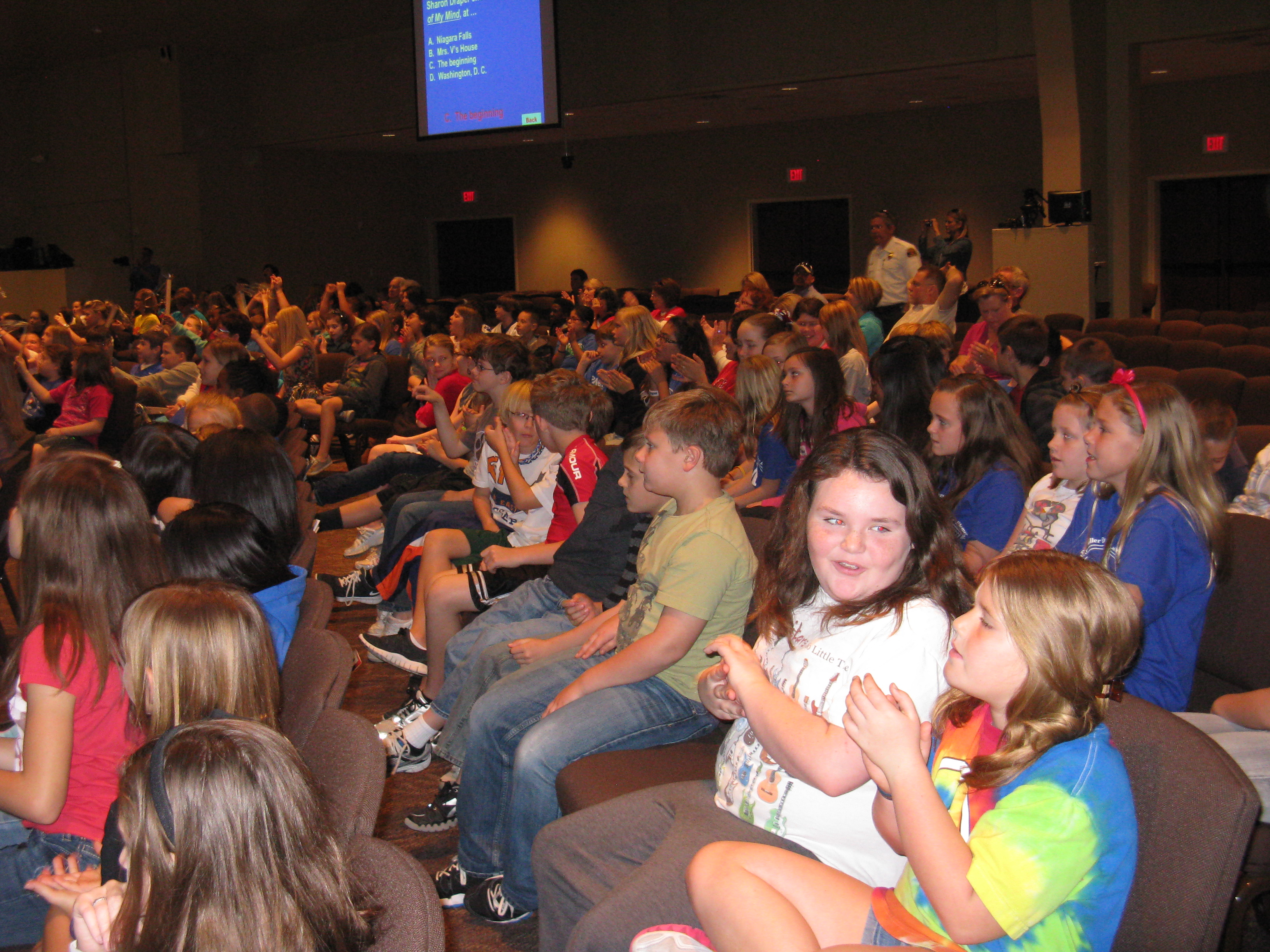 ing rights for the coming year (not that we’re competitive or anything).
Our Miller team came in second place and we’re so proud of their work today (and everyday). Longbranch and Irvin tied for first place this year. The audience enjoyed the competition as much (or more) than the participants as they comprised those who auditioned for one of the six slots on their school’s team. Many of them knew the answers to multiple questions and it was a challenge to keep from shouting out answers. Congrats to our team members: Jayme (captain), Jansson, Ryan, Heather, Mariah, and Autumn, as well as their sponsor, Mrs. Bolgiano, for many hours of reading, quizzing, and preparation for this fun event! You ROCKED it!
Speaking of rocks, our first grade friends enJOYed a day of rock activities and exploration. They were excited about their “finds” and  shared several important facts about rocks located around our campus.
We are digging our engaging work and embracing our competitive spirit here at LME; here’s hoping you do too! 🙂
A STAAR is now born…
 From TABS to TEAMS to TAAS to TAKS, a new STAAR is born in the state of Texas. The State of Texas Assessment of Academic Readiness (STAAR) is the newest testing program from a history of evolving programs in the state educational system. Here’s a little Texas testing trivia to test you:
- When TABS started in 1980, it was the state’s first mandated test administered to students in third, fifth, and ninth grades in reading, math, and writing.
- In 1986, TEAMS tested reading, math, and writing in first, third, fifth, seventh, ninth, and eleventh grades; it was also the first test students were required to pass in order to earn a diploma.
- In use from 1990 to 2002, TAAS tested reading, math, and writing, ultimately to students in third through eighth grades and tenth grade with science and social studies added. Spanish-language tests were made available for the first time and four end-of-course (EOC) exams provided another option for meeting graduation requirements.
- By 2003, the TAKS was presented to assess math, reading, writing, language arts, science and social studies. Students in grades 3 – 11 were tested and promotion requirements (Student Success Initiative—or SSI) were added while graduation requirements were expanded to include all core subject areas. (Source: TEA)
So why care about this? It’s been a while since a new test was rolled out in Texas. STAAR comes with much ambiguity. Please know this: our teachers are leaders in Midlothian ISD and continue to be on their quest for answers by attending conferences and sessions specific to their content areas, then tying this knowledge to the one item we do know well—the TEKS (state curriculum). They are increasing the rigor in our classrooms and our learners (and their families) are feeling these growing pains! They are sharing their new knowledge with your learner and with you. (I especially appreciate our fifth grade team of leaders who stepped out tonight to share specific examples with the fifth grade parents who attended our meeting—thanks for rigorously coming out tonight!).
Yes, there is always uncertainty surrounding the launch of something new. As I tell us during morning message though: Plan your work; work your plan; autograph your work with personal excellence. We know your learner will shine to his or her personal best as a new STAAR is born in Texas!
Note: Testing Weeks are March 26 – 30 and April 23 – 27. Because of testing security and schedules, please remember we are a closed campus to visitors and volunteers during these times. These are the only times we do not welcome you to join us during the instructional day. We appreciate your cooperation and understanding.
LEAPing into the day…
Happy Leap Day! Happy Leap Year! Some of our  Miller Bell reporters (RaeAnn, Macee, and Madi) opened our morning message with this clever poem:
- Some months have just 30 days; the rest have 31.
- But one month has a neat surprise; in fact, it’s kind of fun!
- The days of February number only 28;
- But add one more for leap year and we celebrate!
So I asked, “What is leap year exactly?” As expected, they were read for my question. It seems that Julius Caeser introduced leap year to the Roman Empire over 2,000 years ago. In reality, the use of the leap year each four years keeps our calendar in alignment with the Earth’s revolutions around the sun. In 365 days, 45 minutes, and 46 seconds, the Earth revolves around the sun. Thus, if we didn’t have leap year (with the added 24 hours each four years), we would lose six hours off our calendar. After 100 years, our calendar would then be off by 24 days! WHEW! That’s some math to solve! The girls also shared with us several ideas for using this extra 24 hours today (funny, no extra school hours were mentioned…). 🙂 Here’s hoping this has you LEAPing into lots of options on this special day!
 Van Am Gram