Letter to Santa

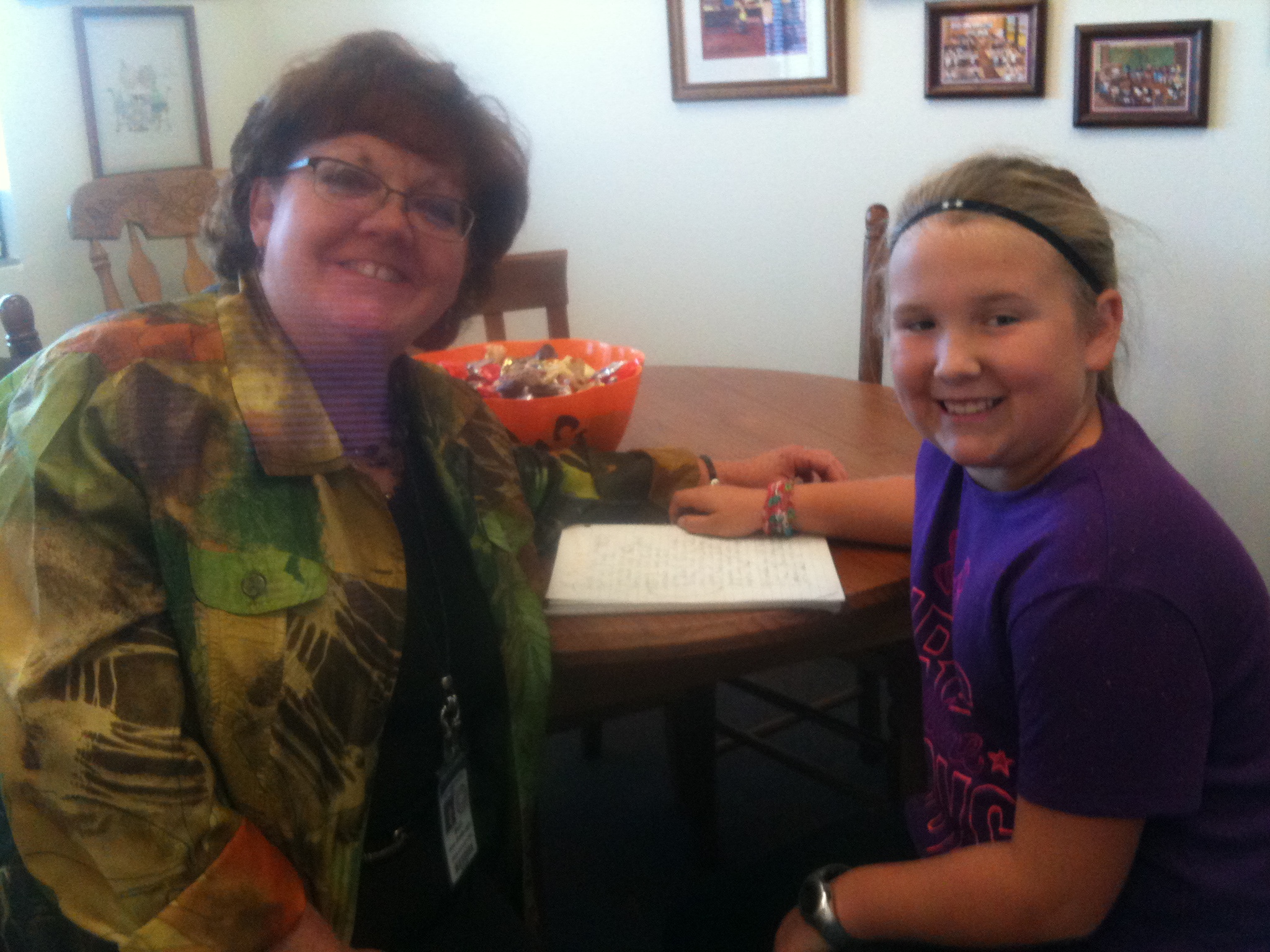
“Mrs. Van, here’s your question today:  Have you written your letter to Santa yet and what do you really want him to bring you this year?”  Thus started a precious conversation about how the tradition of writing letters to Santa got started.

For example, the history behind writing Santa letters appears as mystical as Santa.  The first reference to a letter goes back to the real St. Nicholas in the 13th century (the patron protector of children).

The actual annual tradition of writing St. Nick steadily dear-santa lettertook hold in the 1800’s after the publication of Clement C. Moore’s “A Visit From St. Nicholas.”  Over 100 years ago, the United States Postal Service officially developed a program, Letters to Santa, by helping to make children’s Christmas wishes come true, ensuring letters to Santa remained a holiday mainstay in the lives of generations of families for years to come.

So after this extensive discussion, we both decided whether you believe or not, here’s hoping you have the opportunity to help someone write an important letter soon (whether it involves Santa or not)…and yes, little one, my letter was mailed two weeks ago (but what I said will remain a mystery)!   🙂

Perfect Thanksgiving…WRITE ON!

As is tradition, I was invited this morning to share a special holiday story with some young readers working on an interesting writing project today.  They selected the book The Perfect Thanksgiving by Eileen Spinelli.  perfectTHWritten in fun rhyming couplets, this entertaining tale delightfully shares the story of very different families celebrating Thanksgiving in very different ways.

Enter two families who couldn’t be more opposite:

  1. Family one seems just “perfect”—with a plump golden turkey, gorgeous whipped cream swirls atop their pie, and lace napkins on the table.
  2. Family two, on the other hand, seems very different—the turkey burns, the Jell-O wiggles and jiggles right to the floor, and Dad’s shirt serves as his napkin.

What could these two very different families possibly have in common?  They find they’re alike in “just how loving our different families are…”

After great discussion, these young writers created lists of their own family traditions to place on a hand-decorated turkey (literally drawn from their own hand, mind you, just like they found in the story).  We shared their results making comparisons between various traditions and new ideas.  Full of whimsy, good spirit, and familial love, this laugh-aloud picture book added a spicey springboard to their writing, but will certainly create some interesting conversation during any Thanksgiving feast!  Thanks, my little writing friends…WRITE ON!  🙂

WRITE on…

I shared a delightful time this morning with a student who asked to see me…she wanted to share her latest writer’s workshop example, knowing I LOVE to work with young writers.  🙂  She shared her BB1example first, reading with great intonation, voice inflection, and enthusiasm, carefully drawing a visual image in my mind of where we were and exactly what was happening.  When I asked her how she developed this piece, this was our conversation:

  • Me:  WOW, I feel like I am right in the middle of the action!  How exactly were you inspired to develop this powerful written response?
  • Writer:  Our teacher made us listen to the historical conversation to set the stage but refused to show us the pictures.  She likes to do that to us you know.
  • Me:  So, the idea developed from your own mind’s picture of the action.
  • Writer:  Exactly!  See, I knew you would get it.  When I said right here, “…but America didn’t surrender, what we did was put up a bigger, brighter flag…we lost some of our troops and I was sad…but now America has freedom and peace…,” I was wanting the reader to feel what I felt had I really been there.

You can determined which battle (based on the content clues in her writing) she was writing about today, but the message is clear:  young writers need multiple opportunities to experience not only historical but real-life, everyday events in order to process them.  Writing is a wonderful personal outlet for processing, sharing thoughts, expressing feelings, and recording responses for any event.

Just like our teachers do in class everyday (yes, even in Kinder rooms), we encourage you to start a family journal or notebook where everyone contributes something everyday–whether a picture, a story, a joke, or just a list of ideas, it’s something the entire family can share together and look back on in the years to come.

In the meantime, thanks, Briley, for sharing time, deep conversation, and your obvious enthusiasm for writing with me today.  Thanks for also giving me permission to share your smart work with others too!  🙂  WRITE on…

Fascinating Fourth Grade!

Ahhh…fourth grade…a banner year filled with wonderful writing, challenging curriculum, wonderful writing, conceptual math, wonderful writing, novel units of fascinating tales, and did you know, wonderful writing?!  The amazing classroom leaders/coaches pictured here are Shannon Williams, Brittany Cole, Jane Crisp, and Jennifer Kids…and they fill your child’s fourth grade year with compelling curriculum, life lessons, and fascinating learning fun!

By fourth grade, our learners should have solid foundations in the fundamentals of all core subjects.  These talented classroom leaders take the raw reading, writing, math, science, and social studies skills of previous educational experiences at the beginning of the year and masterfully weave them into a colorful tapestry of amazing writing processes and products throughout the course of the school year.  While writing and Texas history are strong focuses in fourth grade, the educational adventures, humorous experiences, and unique views on a variety of topics and interests challenge each learner to think (and write) beyond the ordinary into the extraordinary.  As a fourth grade friend shared with me: “Mrs. Van, fourth grade teachers view our day as a continuous learning AND writing experience…my hand is sore everyday when I leave!”  🙂

Due to larger class sizes in our fourth grade this year, your personal assistance is very much appreciated.  The one thing you can do to best encourage your fourth grader is to write—write about everything from a list of groceries to a fun family weekend activity.  Tell stories, write stories, share stories together; turn your verbal thoughts into written expression so you model to your young writer.  The best writers write what they know; you have so much to share!  Join us in Fascinating Fourth Grade land this year!