Planting seeds…

Graduation is usually a time when we contemplate our future and purpose. It can be both a time of great excitement and, what I like to call, preventative worry. I certainly remember the anxiousness I felt after each graduation. Whether you or your child are graduating Kindergarten, middle school, high school, or college, or just know a graduate, take note of the 11 lessons author, Jon Gordon, shares from his book, The Seed. seed400 May they empower you and your child on the next steps of the journey forward:

1. You are here for a reason and the most important thing you can do in life is to find, live, and share your purpose. It’s the one thing in life that truly matters; if you don’t pursue it, everything else is meaningless.

2. Follow your passion; it often leads you to your purpose. You may not know what your passion is right now. That’s ok. To help find your passion, seek out learning experiences or jobs allowing you to use your strengths and gifts.

3. Beware of hobbies. Just because you enJOY social media doesn’t mean you would enjoy working for Twitter. Just because you love to cook doesn’t mean you would enjoy owning a restaurant. What aspects of the hobby do you love and work from them.

4. When you quit, quit for the right reasons. Don’t quit because work is hard or you’re experiencing challenges. Quit because in your heart you know there is something else for you to do.

5. Learn from every experience. Every job, good or bad, prepares you for the work you were ultimately born to do.

6.Your current situation may not be your ultimate purpose but it can serve as a vehicle to live and share your purpose.

7. Whatever job(s) you take after graduation, decide to simply serve. When you serve in small ways you’ll get more opportunities to serve in bigger ways.

8. Your dream job is likely not the one you dreamed about. So often we end up in amazing careers that have nothing to do with our college degree or childhood dreams.

9. The quest for your purpose is not a straight line. It is filled with mystery, signs, obstacles, victories, dead ends, delays and detours. Your job is to stay optimistic and faithful on your quest. Teachers are the best at knowing learning does not come in a straight line; there are many curves on the road to success.

10. Don’t rush the future. There is a process all seeds must go through in order to become all they are destined to become, and you must go through this same process to become the person you are meant to be and do the work you are meant to do.

11. Be the Seed. Seeds surrender themselves to the ground so they can be used for a greater purpose. Wherever you are, decide to plant yourself where you are and allow yourself to be used for a greater purpose. When you plant yourself and make a difference, you grow into the person you were born to be and produce a harvest that will benefit others and change the world.

Here’s hoping our planted seeds of this school year truly change the world! 🙂
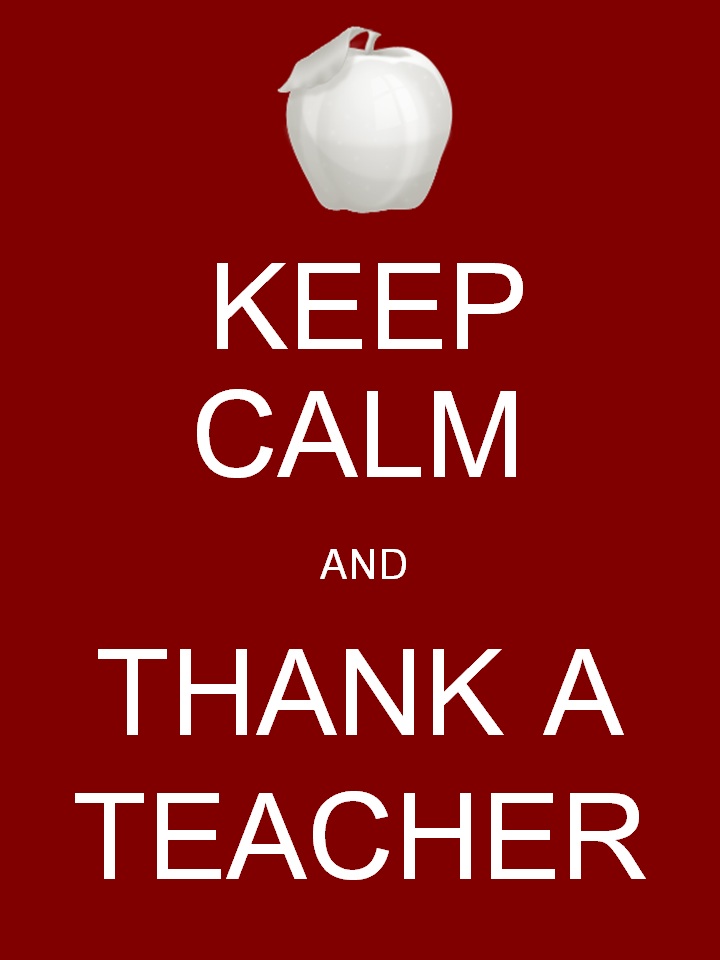
Keep Calm!

It’s been a full week of blessings, praise, accolades, bravos, and so much more! From the festive themes each day (and dressing choices) to the cute snacks and scrumptious treats, we have enJOYed Teacher Appreciation Week indeed! Thanks to our amazing PTO for the homemade meals and dailyteacher-appreciation mailbox surprises. Thanks to the parents and families who showered our teachers in special gifts and daily lunches. Thanks to our learners for the sweet notes and fancy cards. As one little friend shared with me today: “Mrs. Van, it’s nice to be important but it’s more important to be nice…thanks for always being nice and calm all the time.” What a blessing to be in a position to share the JOY of learning with others everyday! Have a safe, calm weekend, LME! 🙂

Power of the Written Word…

dr.seuss-quoteSome highly creative poets and writers open their colorfully-decorated journals to share some personal journal writing with the visitors in class. They eagerly anticipate this opportunity because the journals have been “private” from these visitors all year long, until today, that is. While it’s a personal endeavor each school day, these writers like to read and share aloud to classmates, but the visitors are not aware. There truly is magic in the effort of writer to phonetically write and then read words freely without correction or criticism. They smile, giggle, and genuinely enJOY sharing their words, describing everything from slightly exaggerated fishing trips to painful injuries to hopes and dreams for the future. It’s a marvel how they express themselves with great depth, emotional maturity, and compassion for each other as writers and poets!

Throughout the months of this school year, the teacher may have given topic ideas, daily story starters, prompts, and more, however, the contents are left up to each writer for the day. For many, creating an illustration for their daily entry is a favorite part of the writing process, especially to a child who struggles with the process skill of writing.

The visitors took their perspective place alongside each child’s table area. They began to listen, laugh, and identify spontaneously as funny experiences about learning how to ride a bike, what not to say at someone birthday’s party, catching “the big one,” and more poured out from the worn pages of each child’s journal. The visitors placed their arms around each child, wiped their eyes, spoke softly, or laughed belly-style as they listened to individual stories and poems. Here was the true value of writing for these young learners–their unique self-expression was shining through in their own words, allowing each writer’s parent (the visitors today) a brief glimpse inside the child’s perspective of daily school life and living. One parent in particular grasped the journal in her hands exclaiming, “I’ll treasure this always!”

Everyone is a teacher to someone…sometimes it is easy to forget how learners teach us and those around them everyday. With great attitude and effort, these young writers experience the power of the written word daily. As one learner notes, “WRITE on, Mrs. Van!”

Everyone is a teacher to someone…

teacherIt’s National Teacher Day and where do I even begin to express the depths of appreciation for the work teachers are called to do everyday? To educate literally means, “to assist in training the mind and abilities with instruction to impart knowledge.” Basically, we are all teachers because someone is a teacher to someone every day. While our parents are our first and most important teachers, it is hoped there are many along each educational path who share great enthusiasm, passion, and rapport with us as we climb educational mountains of knowledge. As someone noted, “Thinking will not overcome fear of learning, but action will.” Daily classroom action is what I sincerely hope each learner experiences daily in our classrooms!

During walkabout this morning, these are some comments shared with me by some of our learners regarding our teachers:
*She sees us as unique and encourages our talents and strengths; she smooths the rough edges.
*He looks beyond my face and sees inside my soul.
*She has a caring heart and respects me even when I don’t deserve it.
*He has this great laugh and I know everything will be okay.
*She smiles, looks past my bad choice, and sees my pain.
*He builds my confidence and makes me feel worthy.
*She makes a BIG difference in everyday for me; I know she loves me!

The comments go on and on…what a blessing and honor to do what we do everyday! My Granny B always said, “Generosity is a sign of a great soul.” Teachers are called to this work (and I help those who are not to open their future to other possibilities). Teachers give beyond the daily eight hours and the 180 days of instruction (just visit with a significant other in the life of a teacher for the “real” scoop). Teachers are people who crave encouragement, praise, and positive reinforcement, but rarely experience the fruits of their labor for years to come. We’ve all had the BEST examples of teachers and some who are not…either way, lessons in life were shared and memories were cemented in place (for better or worse). Your challenge is to reach out, thank those who influenced your journey (remember, everyone is a teacher to someone). Take time to share your praise and encouragement. Reflect and revisit those days…thank a teacher today!

Camps, Compassion, and Kindness…

This year is flying by so quickly now and each day brings new opportunities!

summercampsIn looking ahead, please make note of important Summer Sports Camp information:  The Midlothian ISD Athletic Department’s sport camps offer fun-filled summer programs for youth in and around Midlothian, Texas.  Each week, participants jump into action, participating in exciting sport programs while exploring various techniques and tactics associated with athletics.  If you are looking for a sports camp this summer, please check out the links below to sign up. Walk-up registrations are welcome at all camps and more camps will be added when they are finalized.

…and speaking of sports, tactics, and techniques, FieldDay1our 7th Annual Field Day Events was a smashing success!  From the many competitive games to new stations like Gaga Ball Pit, students, staff members, and families joined in the all-day event.  We most certainly appreciated the sublime spring day and wonderful outside temperatures along with the grilled hotdogs provided by Aramark!  Special thanks to Coach Rogers, our Specials Team, our volunteers (including MHS PALs), and our parents for assisting with smiles throughout the day’s events!

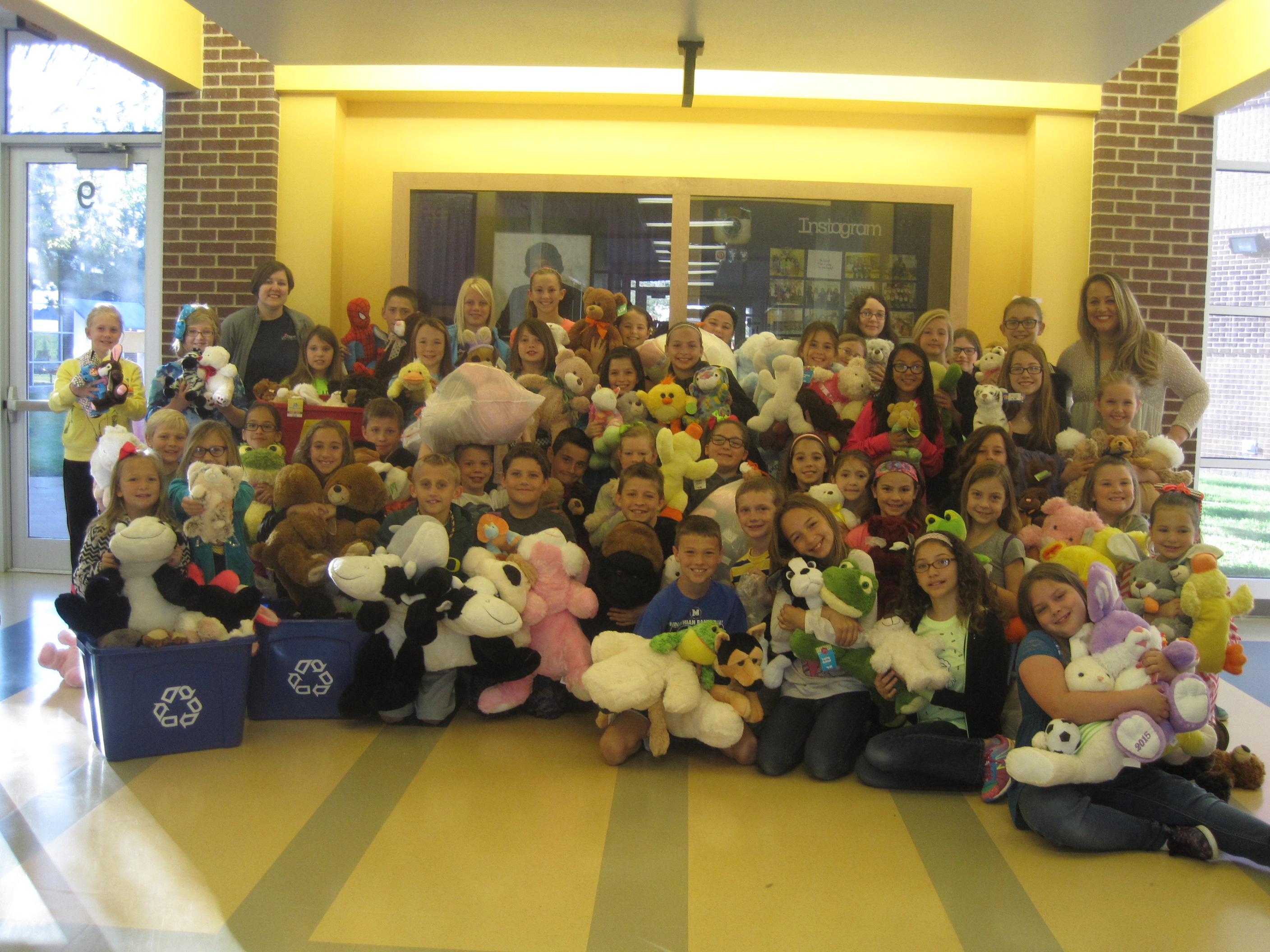
KCpic…and speaking of smiles, our Kindness and Compassion (KC) Club shared big smiles with the folks from Children’s Medical Center of Dallas when they donated over 250 new stuffed animals for patients.  Representatives from the hospital came to accept the donations and shared how these will positively impact many young lives in the days ahead.  The stuffed animals are given to patients during triage, diagnostic procedures, or surgery to calm and bring friendly comfort.  Special thanks to the KC Club sponsor, Ms. Daniell, and her team for encouraging this service learning project throughout our campus.

We are blessed in extraordinary ways everyday on our growing campus.  Thanks for walking the educational journey with us!

The Art of Setting Limits, Part Two

As we discussed yesterday, setting limits is a specific alternative to punishment and threats.MentalToughness Giving a child limits is a tool in the parental (and educator) toolbox for providing positive discipline for a child. In fact, children crave routines and knowing their limits on behaviors; both help them feel safe.

Here’s five-step approach we use in classrooms to set limits with our learners in order to increase effectiveness for everyone:

Explain which behavior is inappropriate. Simply saying “stop that” may not be enough. The child may not know if you are objecting to how loudly he is talking or objecting to the language he is using. Be specific in your directive.

Explain why the behavior is inappropriate. Never assume the child knows why the behavior is not acceptable. Is she disturbing others? Being disrespectful? Not doing a task you asked of her? Again, be specific.

Give reasonable choices with natural consequences. Instead of using the ultimatum (“do this or else”), tell your child what the choices are and what the consequences of those choices will be. Ultimatums lead to power struggles because you are forcing one thing. Providing choices with consequences does not force your decision, but the child’s personal choice. Likewise, consequences that logically follow from your child’s actions usually work best as a teaching tool. Example: In an angry moment, the child chooses to break something. A logical consequence would be for the child to clean up the mess and pay for the item out of her allowance.

Allow wait time. It’s usually best to allow a few moments (not too many) for the child to make the decision. In upsetting moments, it is critical to remember the child is not thinking clearly (and neither are you, most likely). It may take a few moments for everything to process before a choice is made.

Be prepared to enforce your consequences, even when they are inconvenient. Setting a limit is completely meaningless if you do not consistently and persistently enforce the consequences you set with the choice. For example, if your consequence is no TV or social media for a month, be ready enforce it the entire month–no exceptions! Never back yourself into a corner; set reasonable enforceable consequences and stick to them!

Limits are powerful teaching tools to modeling appropriate behaviors. It’s really not about who’s the boss; it’s about modeling respect, giving guidance, and ensuring an overall feeling of safety and security in a nurturing, calm manner. You are your child’s first and most important teacher; practice these techniques and never give up hope! As I remind parents daily, the days of raising our children are long, but the years are far too short…

The Art of Setting Limits

It’s true; we bring this precious life into the world to nurture, love, grow, and shape into an upstanding citizen and leader of the next generation. No one bothers to remind you (as you leave for home that first time) there is no instruction or direction manual for this precious child. As my dear daddy quips, “You need a license to drive, hunt, fish, get married, or any other number of things in life, but anyone can be a parent.” setlimits

During a recent parent conference, I was reminded again of the fine art of setting limits with a child, especially one who is, shall we say, a unique challenge. When we, as parents (or educators), are faced with undesirable behavior from our child, we have to make the decision about how to respond to the behavior. It is easy to be emotional in these moments, but logic should control our response every time.

Likewise, it is much easier to punish than to think of logical consequences connected to the child’s behavior (I call these natural consequences). Punishment works in the short term because it usually stops the unwanted behavior. In the long run, though, punishment does nothing to solve the original problem and can lead to resentment and retaliation (especially in the teen years)—much more difficult to manage it then!

Did you know the actual word discipline comes from a Latin word meaning “to teach” or “to lead?” When you discipline the child, you are setting limits as an alternative to threats or punishment. Limits are powerful tools for parents and teachers to use and setting limits is an art indeed:

Setting a limit is not the same as issuing an ultimatum. Limits are not threats; they offer choices with consequences. “If you clean up your room, you can go outside with your friends. If you don’t clean up your room, you will not go outside with your friends. It’s your choice.”

The purpose of limits is to teach, not to punish. With limits, a child begins to understand personal actions, positive and negative results, and natural consequences. Giving a child choices and consequences provides a structure for good decision-making later in life.

Setting limits is more about listening than talking. Take time to actively listen to your child to better understand thoughts and feelings. You learn more this way and it helps you set more meaningful limits in the future.

In tomorrow’s blog, I will offer five steps to setting limits. In the meantime, remember to give choices and consequences—no one said the choices had to be likable…that’s part of the art of setting limits!

Kinder Camp is coming!

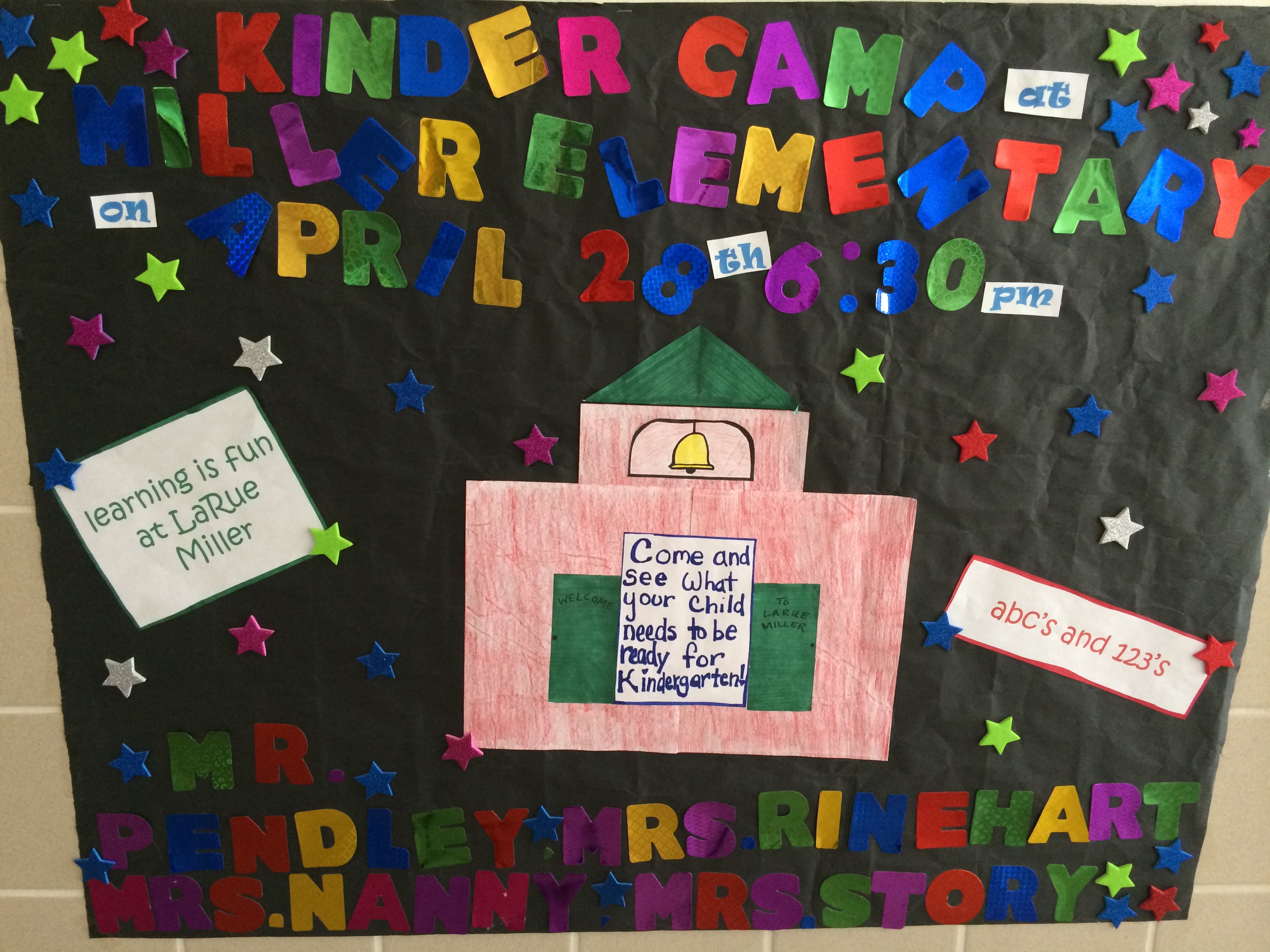
KinderKamp1It’s the time of year when we meet and greet our incoming Kinder friends who will start in MISD next fall! On Tuesday, April 28th @ 6:30 p.m; each elementary campus will host a special KinderKamp2event for Kindergarten children and their parents. Come explore the world of Kinder, learn what you can do now to prepare for the first day, find out about daily routines and expectations, get a special surprise, and much more! Join us in the cafe and be ready to shake our hand in Kinder land!

Note: MANY THANKS for your patience and perseverance this week as we completed state-mandated testing.

Count on me!

She’s one of our youngest learners on our campus but has the heart and soul of an adult.  Her answers to my questions always reflect maturity and just a little too-much-knowing-beyond-her-years.  It’s always such a JOY to talk with her.

This little friend loves being a nurturer to others, especially the dolls in the home area where she has a particular favorite each time.  Her motherly instincts are strong for one so young and I’ve often thought she could demonstrate some valuable parenting lessons to new moms.  She talks softly and kindly to her baby, feeds her, changes her clothes, gives her a bath, and takes great care to show love above all else.

keep-calm-and-count-on-me-11This afternoon, my little friend was called away from her chosen area to visit with her teacher (doing some group work, you see).  She turned to me, “Will you please watch my baby while I go with my teacher?”  I responded with a smile, “Consider it done; I’m happy to help!”  Her little face scrunched some and she looked straight into my eyes, “I’m counting you, Mrs. Van.”  My responsibility deepened then, “Yes, yes I will do my personal best; you can count on me.”

Those little words, “I’m counting on you, Mrs. Van”…what a soul-searching statement in one so young to one much older!  I held the baby and pondered the countless numbers of children we serve daily, yearly, each decade who “count on us” in our classrooms.  We are truly entrusted with a most important task in our call to serve learners each day.  Whether spoken like my little friend or not, they each remind us, “I’m counting on you…”  Here’s hoping we continue our journey to #LoveServeCare daily because yes, they are counting on us all!  🙂

Note:  Just one more full day of testing (and then some makeups on Friday).  Thanks to everyone for your patience this week!  

School as Community…

Once testing was completed, I made the rounds to visit some who were not testing but working in their classrooms on “important matters.” A 5th grade friend stopped me to share how they were talking about our school as a community and how we function as a community. communityIn today’s society, there are few communities with the purpose and depths of a school community–our work is universal, long-lasting, and broad in nature since we serve every single child with no exclusion. From age 3 through 5th grade, our LME learning community sets the foundation and purpose of preparing the next generation to carry forth a way of life in society with values, freedom, responsibility, and more. The most important aspect in the community, though, is the relationship with each child.

Relationships matter; the foundation of any community is the network of relationships. Children need to feel safe and encouraged in order to learn. Likewise, learning and using their social/emotional skills, communicating effectively, and learning to take responsibility for actions and words help build strong relationships in the community. Passing a STAAR test does not include any of these skills, nor does it really indicate career readiness in life. Learning life skills such as working within a community (our school community) ensures each child learns how to be a contributing member of society…”to develop the character, confidence, knowledge, and skills to be successful in life.” (part of the MISD mission statement). Building a climate of healthy relationships in a diverse learning community where every student feels a sense of belonging is a challenge in today’s schools. As my 5th grade friend noted, “We build our school as a community one day and one student at a time.” Well said; build on!